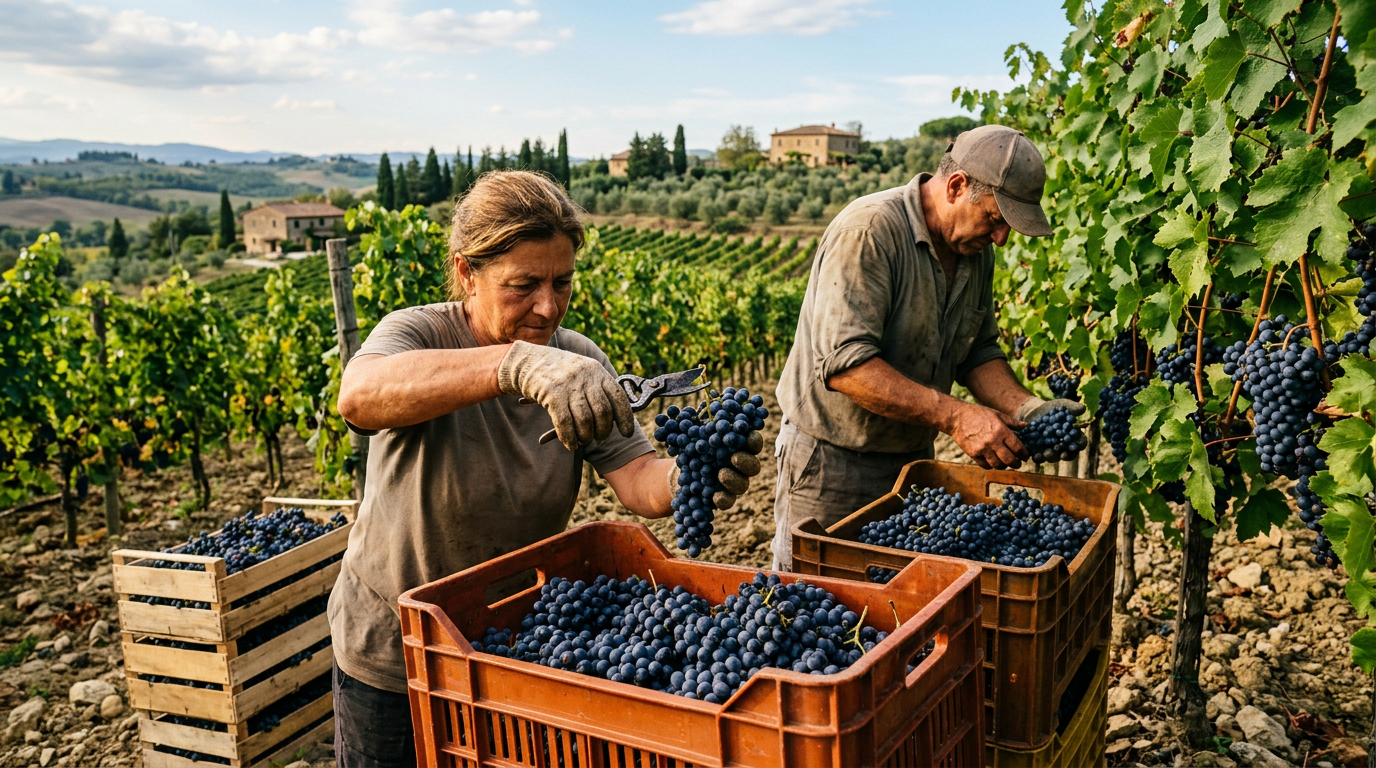
Chianti harvest: how to participate and what to expect
The harvest in Chianti is one of the most direct ways to understand what wine actually is. It is not romantic in the way that wine marketing suggests. It is physical, often hot, repetitive in the best sense, and followed by a lunch that you will remember for a long time. The combination of honest work in the morning and a long table in the farmyard at midday is the oldest rhythm of agricultural life in this part of Tuscany, and it still works.
If you are staying near Barberino Val d’Elsa during September or October, you are in the right place at the right time. The Chianti Classico harvest takes place in the hills immediately east and south of the Val d’Elsa, and small family estates in the area genuinely welcome extra hands. This is not a tourist experience bolted onto a working farm. It is the farm, which is what makes it worth doing.
Taking part in the Chianti harvest
You do not need any agricultural background to join a harvest day. The technique is simple: cut grape bunches from the vine with a small curved knife, place them gently into a crate, and pass crates down the row when they are full. The work requires attention rather than skill, and most wineries will show you exactly what to do in the first ten minutes.
The physical demands are real. You spend three to four hours in the vineyard bent over at waist height, walking on uneven soil, lifting crates that weigh up to 15 kilograms when full. The vineyard rows are not flat. There are rocks underfoot and branches at eye level. By midmorning your back will know you have been working.
Wear old clothes that you do not mind staining. Grape juice, especially Sangiovese, marks fabric permanently. Closed shoes with good grip are essential — the soil in Chianti vineyards is often rocky and the slopes are steeper than they look in photographs. Bring a hat and sunscreen. September mornings can start cool but the temperature rises quickly once the sun is above the ridgeline.
The reward for the morning is the lunch that follows. Every winery that invites you to help with harvest will feed you. Expect ribollita, pappardelle with wild boar ragu, roast pork or chicken, local cheese, and a steady supply of wine from the estate’s own cellar. This lunch is not a symbolic gesture. It is a serious meal that the host family takes pride in, and it typically lasts two hours.
When the harvest happens
The Chianti Classico harvest runs from mid-September to mid-October. The exact timing varies each year depending on the weather during the growing season and the altitude of individual vineyards.
Sangiovese, which makes up the backbone of all Chianti Classico, is a late-ripening variety. It is almost always the last grape picked on any estate. Earlier international varieties like Merlot and Colorino may come in during the first week of September. Sangiovese generally follows in the last two weeks of the month.
In years with a hot and dry summer — which in Tuscany now means most years — the harvest can begin a week or two earlier than historical averages. In cooler or wetter years it pushes into October. The only reliable way to know the timing for a specific estate in a specific year is to contact them directly in August and ask.
If you want to be present for Sangiovese picking — which is the meaningful experience — target the last ten days of September. Plan your stay around that window and you will be in the right place with a high degree of certainty.
How to find a winery that accepts you
The most effective approach is direct contact. Small and medium family estates near Barberino Val d’Elsa are the best candidates. Large commercial producers with 50 or more hectares typically harvest by machine and have no need for extra hands. Look for estates with fewer than 20 hectares of vines.
Good candidates describe themselves as family-run on their websites and mention agriturismo accommodation or farm stays. These estates have a tradition of hosting guests and are usually comfortable incorporating harvest visitors into their rhythm.
Write directly to wineries you find through the Strada del Vino Chianti Classico website or through the Consorzio del Vino Chianti Classico’s producer listings. Mention the dates you are available, how many people are in your group, and that you are specifically interested in a vendemmia experience. Ask about the expected picking dates for Sangiovese in their vineyards.
Some agriturismi near Barberino offer structured harvest packages: accommodation, meals, and a morning of picking at a nearby estate. These cost more than making your own arrangement but provide certainty about logistics and remove the awkwardness of negotiating access independently.
What to do during the harvest
A harvest morning typically begins at seven or eight o’clock. The rows are assigned and picking starts immediately. The pace is set by the most experienced workers in the row. Your job in the first hour is to watch, copy, and not get in the way. By mid-morning you will have found your rhythm.
The social texture of a working harvest is part of the experience. You work alongside seasonal workers who may be local or from other parts of Italy or Europe. Conversation happens between rows, at the ends of rows, and during the brief moments when crates are being collected. The language may be Italian, Moldovan, Polish, or a mixture. Hospitality is extended through gesture and proximity as much as words.
When the picking finishes, usually around midday, work stops completely. Everyone moves to the farmyard or a covered outdoor space. The transition from vineyard to table is immediate — there is no intermediate tidying-up period. The lunch is the second half of the working day.
In the afternoon, at many estates, you can observe the grapes arriving at the sorting table and being tipped into the fermentation tanks. The winemaker may explain what is being done and why. You are watching the first stage of wine being made from grapes you helped to pick. The circularity of this experience — from vine to tank in a single day — is what makes harvest participation different from any tasting or cellar tour.
The grape festivals of September
Several villages in the Val d’Elsa and Chianti hold harvest festivals in September and October. These complement rather than replace the winery experience.
Greve in Chianti, about 20 km from Barberino, hosts the Chianti Classico Expo in September. This is a major annual tasting event where dozens of producers open bottles from current and recent vintages. It is one of the best opportunities in the year to taste a wide range of producers in a single session.
Impruneta, about 30 km to the north, holds the Festa dell’Uva in October. The village is divided into four districts that compete with decorated floats carrying enormous sculptural arrangements of grapes. It is festive, crowded, and genuinely local — the kind of event that exists for the people who live there rather than for the people who visit.
Barberino Val d’Elsa and nearby Tavarnelle sometimes organise smaller sagre during September. Look at local bulletin boards and the comune website for the current programme. These events rarely appear in online travel guides, which is a reason to attend them rather than a reason to stay away.
Bring cash. Not all producers at festivals accept card payment for bottles or tasting samples.
How to prepare for the experience
A few practical points make the difference between a comfortable day in the vineyard and an exhausting one.
Footwear is the most important decision. Do not wear trainers with flat soles. The vineyard soil in Chianti is rocky and often sloping. A shoe with ankle support and a gripping sole keeps you stable and comfortable through the morning shift.
Pack a small bag with water, sunscreen, and a light snack — an apple or a handful of nuts — for mid-morning. The morning shift runs three to four hours without a formal break. Lunch will be generous but it arrives late in the morning from a hungry perspective.
If your access to the harvest comes through a direct winery contact rather than an organised package, send a short message the day before confirming the start time and the address. Vineyards in the Chianti hills can look similar from the outside. Having a precise address and a name to ask for avoids confusion.
Consider staying at least two nights in the area if you are coming specifically for the harvest. One morning of picking is a complete experience. Two or three days allows you to follow a longer arc of the process: picking one day, watching fermentation begin the next, and understanding what the estate is working toward over the following months.
Where to stay
Sogno d’Oro in Barberino Val d’Elsa sits at the centre of Chianti Classico territory. Vineyards producing some of the most respected wines in the denomination are within a few kilometres of the guesthouse in every direction. The landscape you see from your window during September and October is the landscape that produces the wine. There is no better base for a harvest experience in this part of Tuscany.