Tuscany extra virgin olive oil: buying from producers near Barberino
Tuscan extra virgin olive oil is among the most distinctive in the world. It is not the soft, sweet oil of the Mediterranean south. It is green, assertive, and intensely peppery — a flavour that comes from olives harvested early, pressed cold, and bottled without filtration or delay. The first time you pour a freshly pressed Tuscan oil over warm bread, you understand immediately why it cannot be substituted.
The Val d’Elsa and the surrounding Chianti hills are among the finest olive-growing territories in Italy. If you are staying near Barberino Val d’Elsa, you are sleeping in the middle of some of the country’s best olive country. The estates that produce here are within a short drive, and in many cases accessible on foot or by bicycle.
Val d’Elsa extra virgin olive oil
The olive-growing zone around Barberino Val d’Elsa falls within the IGP Chianti Classico area for olive oil, one of the most respected denominations in Italy. The principal varieties cultivated here are Frantoio, Moraiolo, Leccino, and Pendolino. These are not grown for their ease of harvest or their oil yield. They are grown for the flavour compounds they produce: the polyphenols that create bitterness and pepperiness, and the volatile aromatic compounds that generate the green, grassy, artichoke-like aromas that define the Chianti style.
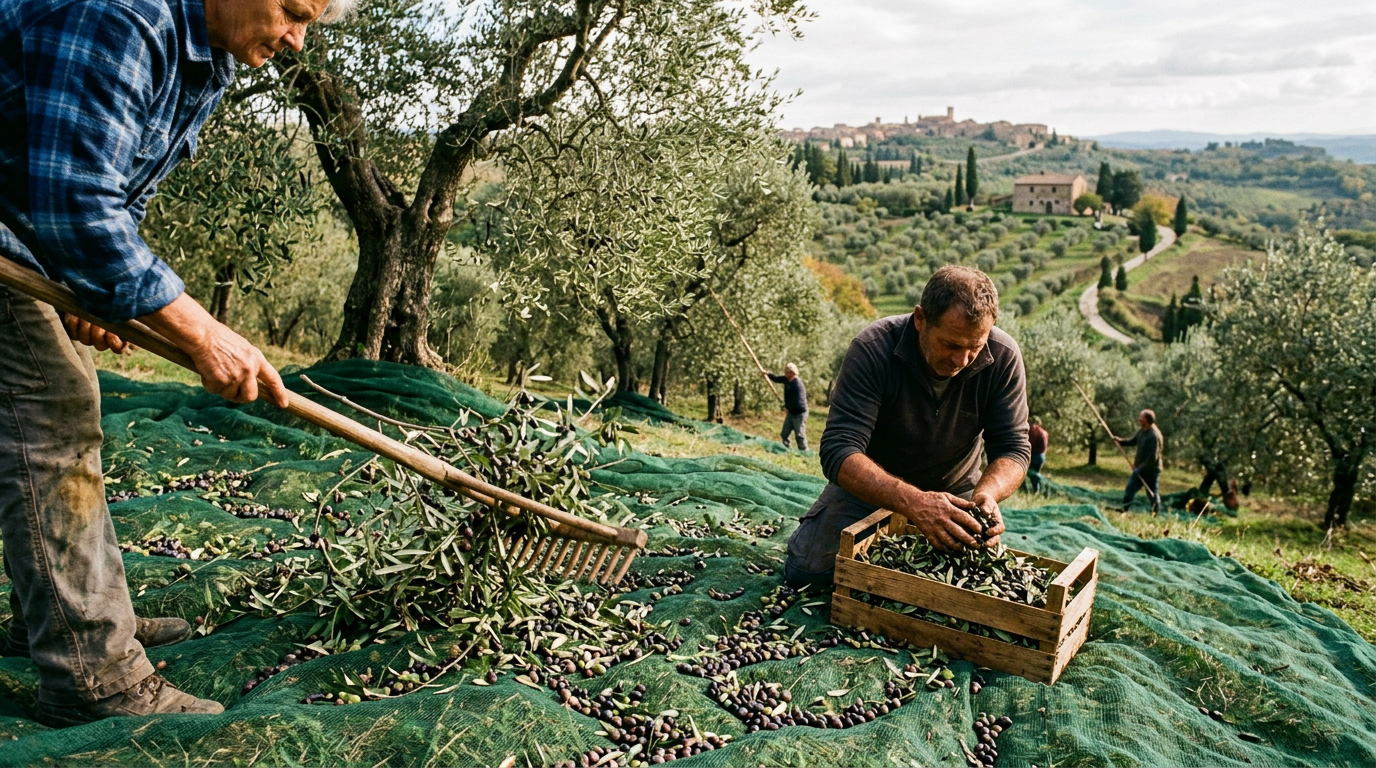
Harvest in this area typically begins in late October and runs through November, earlier in years with abundant fruit, later in wet seasons. The olives are picked before they reach full maturity. This deliberate choice to harvest green rather than ripe is what produces the high polyphenol content and the peppery finish. A ripe olive gives more oil per kilogram but a sweeter, less complex product.
The pressing method matters enormously. Quality producers use continuous cold extraction, a centrifuge system that processes the paste without adding heat. The result is oil that retains all its aromatic compounds and has an acidity level well below the legal maximum for extra virgin status. The legal limit is 0.8 grams of oleic acid per 100 grams. Quality producers in the Chianti regularly produce oils at 0.2 grams or below.
A freshly pressed Chianti oil, consumed within weeks of the harvest, is one of the most visceral and direct food experiences Italy offers. It is poured green and slightly opaque, sometimes with small particles still suspended, and drizzled over a thick slice of warm Tuscan bread. The flavour is immediate, grassy, bitter at the back of the tongue, and then deeply peppery in the throat. The cough this provokes is not a sign of harshness. It is the natural response to oleocanthal, the same anti-inflammatory compound present in ibuprofen.
Local producers
The hills between Barberino Val d’Elsa, San Donato in Poggio, and Tavarnelle Val di Pesa are dense with olive groves. Many of the Chianti Classico wine estates here also operate olive oil production facilities. Buying at the winery during a wine visit is one of the most efficient ways to find good oil, because the estate can tell you exactly when the harvest happened and how the oil was stored.
Small family estates in this area often sell oil directly from the farm on request. These sales are not always advertised online. The best way to find them is to ask locals, ask at your guesthouse, or simply stop at a farm gate with an olive oil or agriturismo sign and inquire.
Farms around Tavarnelle Val di Pesa, about eight kilometres south of Barberino, have a particularly strong tradition of oil production alongside viticulture. The same applies to the estates above San Donato in Poggio, about ten kilometres southeast. These are quiet working properties that do not rely on visitor traffic but typically welcome guests who make contact in advance.
Look for the IGP Chianti Classico designation when buying. This protected indication guarantees origin, variety, and minimum production standards. It does not guarantee great oil in the same way that a personal relationship with the producer does, but it provides a baseline of quality and traceability.
How an olive oil tasting works
An olive oil tasting follows a specific professional protocol, though informal farm tastings are more relaxed in their approach. The formal version proceeds as follows.
The oil is served in a small dark blue glass warmed between both palms. The warmth activates the volatile aromatic compounds. You hold the glass cupped in your hands for a minute or two before opening it.
Smell the oil slowly, moving the glass in a slow circle to release the aromatics. Fresh Chianti oil typically shows green aromas: fresh grass, green tomato, raw artichoke, sometimes almond or walnut. Any mustiness, rancidity, or vinegary note indicates a defective oil and you should mention it.
Then take a small sip of about three to five millilitres. Draw a little air through the oil as you taste it, the way a wine professional aerates wine in the mouth. This spreads the oil across all areas of the palate. You assess fruitiness first — the intensity and type of fruit character. Then bitterness on the sides of the tongue, a valued quality in Chianti oil. Then the peppery finish at the back of the throat.
The peppery sensation is the most important quality indicator for young Chianti oil. A mild tingle means good polyphenol content. A strong cough or burn is a sign of an exceptionally fresh and high-quality oil, not a flaw.
Between samples, cleanse your palate with plain bread or green apple. Avoid eating cheese or cured meats before a tasting as their strong flavours interfere significantly.
What to buy and at what prices
A 500-millilitre bottle of quality extra virgin olive oil from a small Chianti estate typically costs between 12 and 20 euros. Oils with IGP Chianti Classico certification sit toward the upper end of this range. This price is substantially higher than supermarket olive oil, and the difference is entirely real.
Buying in larger formats reduces the price per litre significantly. A five-litre tin directly from a producer costs 50 to 70 euros — roughly ten to fourteen euros per litre — and will supply a household for months. Tins are better for transport than glass bottles: they are lighter, unbreakable, and provide better light protection.
Always check the harvest date on the label rather than the best-before date. The legal best-before standard for olive oil is 18 to 24 months from bottling, which tells you nothing about freshness. The harvest year, typically printed as “raccolta” followed by a year, is the relevant number. Buy the most recent harvest available.
Carry oil home in checked luggage wrapped in clothing inside a sealed plastic bag. Breakage is unusual but the protection is worth the small effort.
Farms near Barberino Val d’Elsa
The frantoio, or olive pressing facility, is the heart of olive oil production. Several estates in the Barberino area operate their own frantoi and some open them to visitors during the harvest period in October and November. Watching the continuous cold extraction process — the olives entering the crusher, the paste moving to the separator, the green oil flowing from the centrifuge — is a brief but genuinely illuminating experience. The smell alone is extraordinary.
Even outside harvest season, estates sell their stored oil from the previous harvest. Oil stored correctly in sealed stainless steel tanks under nitrogen, then bottled on demand, maintains its quality for ten to twelve months from harvest. A good producer’s oil from the previous November, purchased in August, is still an exceptional product.
If you want to time a visit with the olive harvest, contact farms in the first half of October. Many estates welcome visitors who want to help pick olives and watch the pressing. Unlike the grape harvest, olive picking requires no particular physical strength and is accessible to almost anyone. The harvest typically runs from late October through mid-November in the Barberino area.
Ask at Sogno d’Oro for current recommendations. Local knowledge about which nearby producers are selling directly and whose oil is particularly good this year is more accurate and more current than anything printed in a guide.
Where to stay
Sogno d’Oro in Barberino Val d’Elsa places you at the centre of Tuscany’s finest olive oil territory. The countryside immediately around the guesthouse is the same landscape that has produced olive oil for more than two thousand years, from the Romans who established the first groves to the families who press each November today.
Staying here gives you the time, proximity, and local knowledge to find oil that you will not find in any shop.